Retailers that implement a specialized CRM see +20% in purchase frequency and +8% in average ticket.
SCHEDULE DEMO
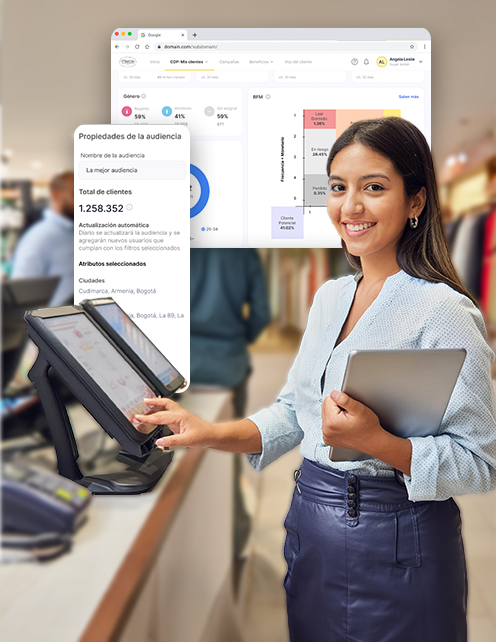
Create a complete profile for each customer based on their demographic, transactional, behavioral and psychographic data from multiple sources. A retail CRM like Leal 360 unifies data from POS, e-commerce, and loyalty programs to grow purchase frequency, average ticket, and recurrence.
It does not manage B2B pipelines: it optimizes the entire end-customer lifecycle. Unlike a traditional CRM, Leal 360 is built to grow retailers through behavior-based segmentation and personalized campaigns.

A traditional CRM manages contacts and opportunities. A retail CRM understands purchases and end customers: it unifies data from POS and digital channels, builds 360 profiles, and segments to grow frequency, ticket, and repurchase across every store.
Using machine learning models of propensity to buy, know what your customers are buying, when they buy it, and how much they're spending.
Before making a decision, make sure to evaluate the right criteria and avoid the most common mistakes when comparing platforms.

In the purchase frequency of your customers.
Increase in the average purchase ticket.
In the repurchase rate of your customers.
From ROI (return on investment)

With the RFM model, segment your customers based on the last time they made a purchase, their purchase frequency and their average ticket. This way you can get to know your sleeping, at-risk and lost customers.
With the RFM model (Recency, Frequency, and Monetary value), Leal 360 automatically segments your customers based on real purchase behavior: frequent, at-risk, dormant, or lost.
Activate dynamic audiences and send the right message at the right time to recover, retain, and grow each segment.
A CRM in retail is a system that lets you manage and use customer information to improve their shopping experience. It centralizes data like history, preferences, and interactions, and makes it easy to run campaigns, segment audiences, and personalize. It is a key tool that typically complements a loyalty platform to deepen the customer relationship.
Leal 360 centralizes customer data into a 360° profile, connecting POS transactions, digital interactions, and loyalty program engagement to activate personalized actions that drive repurchase, purchase frequency, and Customer Lifetime Value (CLV).
The Leal 360 customer loyalty platform is a all-in-one solution for B2C retailers that lets you identify, retain, and grow the value of each customer based on their real purchase behavior.
Unlike traditional points programs, Leal 360 incorporates artificial intelligence to:
All of this lets retailers move from generic programs to a data-driven, automated loyalty strategy oriented to measurable revenue.
La Leal 360 customer loyalty platform unifies data from POS, ERP, e-commerce, and digital channels to build a 360° customer profile. The main data points it uses include:
With this centralized information, Leal 360 lets you design and activate loyalty strategies based on real behavior, not assumptions, driving more relevant actions and higher impact on retention and repurchase.
Traditional loyalty programs focus on accumulating points and offering generic rewards. Leal 360 goes further by using artificial intelligence and dynamic segmentation to activate personalized experiences based on real customer behavior.
Instead of offering the same incentive to everyone, each customer receives messages and benefits aligned with their lifecycle stage, which lets you improve repurchase, purchase frequency, and average ticket, without relying exclusively on discounts.
Leal 360 does not just activate hyper-personalized campaigns, it also measures their impact at the individual level. La platform attributes each purchase to the customer's exposure to specific campaigns, letting you compare exposed vs. unexposed customer behavior.
This makes it possible to measure real lift in purchase frequency and average ticket, and accurately calculate the incremental impact on ARPU and CLV. By combining per-customer attribution with behavior-based automation, retailers can continuously optimize their campaigns and scale only those that drive real revenue, not just engagement.
A data-driven loyalty strategy lets retailers directly impact the metrics that drive revenue, como: